

A Little More Info
Now that we have covered the basics of Dynamic, Condenser and Ribbon microphones, there is one more characteristic of microphones that is important to discuss before talking about what specific microphones you could potentially use in your setting. This is polar response (or pickup) patterns. Polar response patterns are going to be found on any microphone you purchase. They determine which direction your microphone receives or rejects sound. There are many different types of polar response patterns (See figure 1). To understand figure 1 a little bit more, microphone pickup patterns are often described in relation to a 360-degree surface, where 0 degrees is the front of the microphone and 180 degrees is the back of the microphone (See figure 2). The most common pickup patterns that you will find in your microphones are Cardioid, Omnidirectional, and Hypercardiod, with Supercardioid and Bidirectional/Figure 8 being less common.
Having a basic understanding of all polar response patterns is very helpful. However, practically put, cardioid or hypercardioid microphones will provide more direct sound from your performers and pastors, and less of the PA system/room or audience (in microphones, this is called rejection). You can see the approximate amount of rejection per response pattern in figure 1. Rejection is amazingly helpful in mitigating feedback. Feedback occurs when the sound of the microphone is played through the PA system, picked up by the microphone, and then retransmitted to the PA causing what is known as a “feedback loop.” This, more often than not, manifests itself in a high-pitched tone that only continues to get worse until you turn the microphone down. The only two microphones that do not have some sort of rejection (relative to the front of the microphone) are Omnidirectional and Bidirectional, but cardioid and hypercardioid microphones will provide the most rejection of all polar response patterns.

Figure 1
1
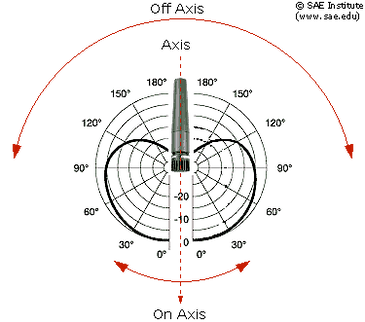
Figure 2
2